Trump Projects Strength on China as Tech Failures Raise Concerns
Trump Projects Strength on China as Technology Failures Raise Concerns
Donald Trump is seeking to project confidence and leverage in dealings with China. At the same time, a series of technology-related failures is generating concern inside the United States. The contrast creates a difficult political and strategic problem: Washington wants to present American power as reliable abroad while visible problems at home raise questions about competence, preparedness, and accountability.
Available reporting identifies a pattern of technological problems but does not provide enough verified detail to establish the precise systems involved, their causes, or their consequences. Those limits matter. A technical malfunction, a recurring infrastructure weakness, and a broader planning failure are different events that require different responses.
The wider issue is clear. Technology sits at the center of the U.S.–China relationship. Semiconductors, artificial intelligence, telecommunications, cybersecurity, digital infrastructure, and advanced manufacturing all affect economic growth and national security. In that environment, public failures can become more than domestic political controversies. They can influence how citizens, businesses, allies, and competitors assess American capability.
Why Trump Wants to Project Strength in China
A strong public posture can support several objectives. It can reinforce a tougher negotiating position, reassure domestic supporters, shape Chinese expectations, and demonstrate that the United States still intends to influence the global balance of power.
Statements made before or during high-level diplomacy also affect markets and public expectations. Chinese officials, American voters, investors, and allied governments examine the language surrounding Trump’s approach. Firm rhetoric can signal resolve, although it does not prove that negotiations are settled or that Beijing has accepted Washington’s demands.
Projecting strength also carries political value. Trump has often treated international negotiations as tests of personal and national leverage. A visible display of confidence can frame discussions as an exercise in American influence rather than a reaction to Chinese pressure.
The risk is that rhetoric can raise expectations faster than policy can deliver. If a meeting produces limited results, or if domestic failures undermine the image of control, the gap between presentation and performance may become politically significant.
The Importance of a Trump–Xi Meeting
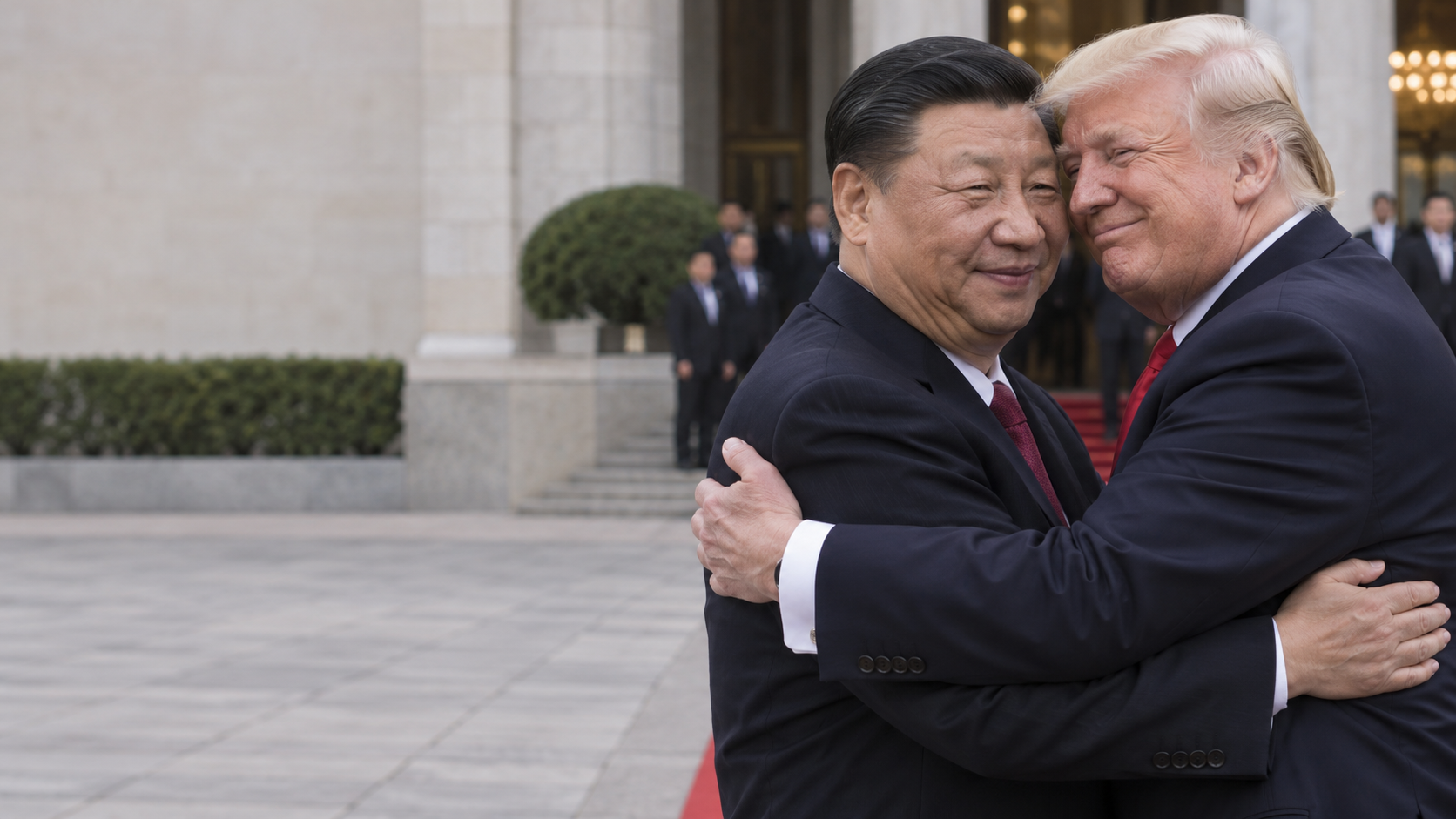
A meeting between Trump and Chinese President Xi Jinping would matter beyond any individual agreement. Leader-level discussions establish the tone for wider diplomatic contact, reduce or increase uncertainty around trade policy, and signal priorities to allies, competitors, and companies.
The meeting could address trade, technology controls, supply chains, security, and the broader direction of U.S.–China relations. It could also serve a narrower purpose: keeping communication channels open while both governments remain divided on major issues.
Canadian Prime Minister Mark Carney reportedly assessed that relations with China were not Trump’s primary concern ahead of the meeting. That assessment suggests China may be one issue among several competing priorities rather than the administration’s sole focus. It also highlights the difference between political attention and policy priority. A meeting may receive extensive coverage even when participants are balancing several domestic and international objectives. Source 7
The meeting’s importance will depend on substance and follow-up. A temporary reduction in tensions could matter even without a comprehensive settlement. Conversely, a forceful public exchange without practical agreements could leave the underlying rivalry unchanged.
The Main Issues in U.S.–China Competition
Trade and Economic Pressure
Trade remains a foundation of the rivalry. Tariffs, market access, supply-chain dependence, export controls, and investment restrictions connect economic policy to national security.
The United States and China remain economically linked while competing for influence and technological advantage. That interdependence creates leverage but also limits the effectiveness of pressure. Tariffs can raise costs for companies and consumers. Export restrictions can disrupt production. Retaliatory measures can affect American businesses operating in China and Chinese firms dependent on foreign markets.
Washington’s challenge is to apply pressure without creating unnecessary economic damage. A strategy based on leverage must account for supply-chain disruption, inflationary effects, business uncertainty, and the possibility that restrictions will encourage China to accelerate self-reliance.
For Trump, trade policy is also part of the broader effort to demonstrate strength. The central question is whether pressure produces concrete concessions or simply deepens an unstable economic relationship.
Technology and Semiconductor Competition
Technology is one of the most sensitive areas of the U.S.–China relationship because advanced systems support both commercial growth and military capability.
Semiconductors power data centers, smartphones, industrial equipment, vehicles, communications networks, and defense systems. Artificial intelligence depends on advanced computing hardware and software. Telecommunications and digital infrastructure affect economic activity, public services, and national security.
The United States is pursuing several objectives at once:
- Protecting national security.
- Limiting the transfer of strategically important technologies.
- Preserving domestic innovation.
- Supporting American companies.
- Maintaining leadership in emerging industries.
China has parallel incentives to reduce dependence on foreign suppliers, expand domestic technological capacity, strengthen strategic industries, and increase its influence in global technology markets.
This competition makes reliability especially important. A country that seeks to restrict China’s access to advanced technology and lead the next generation of innovation must show that its own systems, institutions, and infrastructure function effectively.
Security and Strategic Rivalry
Economic and technology disputes overlap with military competition, cybersecurity, regional tensions, and critical-infrastructure protection. The result is a relationship in which a commercial decision can carry strategic consequences.
Technology failures at home may therefore be interpreted through a national-security lens. The public may ask whether a problem reflects weak procurement, outdated infrastructure, poor coordination, or inadequate protection against cyber threats. Foreign governments may ask similar questions, although public evidence does not automatically justify those conclusions.
Domestic reliability affects foreign-policy credibility. Partners and competitors assess national capability through visible performance as well as official statements. A confident diplomatic message has greater force when supported by dependable institutions and effective systems.
Why Technology Snafus Create Domestic Concern
Technical Problems Become Political Events
Technology failures can quickly become national political issues because they affect public confidence and raise questions about accountability. A disruption involving a government service, communications platform, infrastructure network, or digital system can make technical weaknesses visible to millions of people.
The political meaning depends on the pattern:
- An isolated malfunction may reflect an ordinary operational failure.
- A recurring systems problem may indicate inadequate maintenance or weak oversight.
- A broad planning breakdown may point to institutional or procurement failures.
The available source summaries describe a series of technology-related problems but do not identify enough verified details to classify them. It would be premature to attribute specific causes, assign responsibility, or claim that the failures demonstrate a national decline.
The political concern does not require proof of technological decline. Repeated problems, unclear explanations, or slow recovery can damage confidence even when each individual incident has a limited effect.
The Credibility Gap
The central concern is a potential gap between the image the administration seeks to project abroad and the experience of people at home.
Can the United States claim technological superiority while visible systems fail? Do domestic disruptions weaken confidence in national modernization? How quickly can officials restore trust after an incident?
These questions do not imply that the United States has lost its technological edge. American research institutions, companies, universities, and engineering organizations continue to provide substantial capacity. A single failure cannot measure the entire national innovation system.
Credibility depends on more than technological potential. It also requires reliable infrastructure, skilled personnel, effective oversight, transparent explanations, and measurable improvement. A country can possess world-class research while operating public systems that are poorly integrated or badly maintained.
The issue is not whether one malfunction proves that China has surpassed the United States. The issue is whether officials can identify weaknesses and correct them before they become recurring vulnerabilities.
The Cost of Poor Communication
Unclear communication can intensify concern. Conflicting explanations, limited information, unclear responsibility, and unsupported promises of rapid fixes can make an operational problem appear larger.
An effective government response should explain:
- What happened.
- Which services or systems were affected.
- What remains unknown.
- What safeguards were introduced.
- Who is responsible for the investigation.
- When the next update will be provided.
- Whether corrective measures worked.
Officials should distinguish confirmed facts from preliminary assessments. That approach reduces speculation and gives the public a basis for evaluating progress.
Silence can create its own narrative. When officials do not explain a failure, critics and foreign competitors can fill the information gap. Transparency cannot eliminate every political consequence, but it can prevent avoidable distrust.
Domestic and International Consequences
Public Confidence
Repeated technology failures can reduce trust in government competence, digital services, and modernization programs. Citizens may question whether additional technology spending will improve services or merely expand systems that remain vulnerable to failure.
Confidence can decline even when a disruption is temporary. The decisive factor may be the official response rather than the initial malfunction. Rapid recovery, clear information, and evidence of remediation can limit the damage. Evasion and contradictory statements can extend it.
Businesses and Investors
Unreliable systems create operational risks for companies. Disruptions can affect transactions, logistics, communications, data processing, and supply-chain planning. Businesses operating amid U.S.–China tensions already face uncertainty over tariffs, export controls, investment rules, and technology restrictions.
When policy and infrastructure appear unpredictable, companies may delay investment, diversify operations, or seek alternative suppliers and platforms. Investors may also place a higher premium on resilience and regulatory clarity.
Repeated failures may become one factor in decisions about where companies build facilities, store data, conduct research, and establish partnerships.
Allies and Partners
U.S. allies monitor domestic technology performance because they may depend on American systems, platforms, intelligence, security guarantees, or supply chains. They may also be asked to support restrictions on China or coordinate controls on advanced technologies.
Visible weaknesses can complicate those requests. Allies must assess whether American leadership is dependable over the long term. They may also seek additional autonomy if they believe U.S. policies or systems could change abruptly.
No available source establishes that allies have changed policy because of the reported failures. The risk is prospective: domestic weaknesses can make cooperation more difficult if they reinforce doubts about American consistency.
China’s Strategic Messaging
China could use American technology problems in its own communications by questioning U.S. competence, promoting Chinese technological progress, or presenting American restrictions as evidence of strategic anxiety.
Public messaging does not automatically create a decisive strategic advantage. Propaganda value, technical capability, and diplomatic leverage are different measures. China may highlight an American failure without possessing a superior alternative in the relevant field.
The United States faces a similar obligation when discussing Chinese technology. Officials should separate verified capability from political messaging and avoid treating every development as proof of either inevitable Chinese dominance or permanent American superiority.
Strength Abroad Requires Capability at Home
Projecting strength usually involves firm public language, clear negotiating demands, visible control of the agenda, and confidence in national capabilities. Political leaders often emphasize these qualities before major international meetings because they want to shape expectations.
But overstatement has costs. It can raise expectations, reduce room for compromise, and make a limited outcome appear to be a major defeat. It can also make domestic failures more damaging because every malfunction conflicts with the advertised image of control.
Durable strength requires institutional capacity:
- Functional public systems.
- Reliable digital and physical infrastructure.
- Skilled technical personnel.
- Strong research and development.
- Effective procurement.
- Independent oversight.
- Coordination between government and industry.
- The ability to recover from failure.
Technology snafus can expose the difference between symbolic strength and operational capacity. The distinction matters in the U.S.–China technology competition because influence depends on sustained performance rather than one speech or one meeting.
A balanced interpretation is necessary. Technology failures do not automatically prove that the United States is losing its technological edge. Diplomatic confidence does not erase legitimate domestic weaknesses. The key question is whether leaders acknowledge problems and produce measurable improvements.
Observers should evaluate whether affected systems recovered, causes were identified, responsibility was assigned, safeguards were introduced, independent reviews were released, the same problems recurred, and policy improved national resilience.
What to Watch Next
Negotiation Outcomes
The next stage of U.S.–China relations could produce concrete agreements, temporary de-escalation, new trade measures, technology-related commitments, or continued disagreement without a major breakthrough.
The absence of a dramatic agreement would not necessarily mean failure. Maintaining communication can reduce miscalculation and preserve opportunities for future negotiations. However, sustained dialogue will matter only if it produces clearer rules or limits the risk of escalation.
Technology Policy
Companies and allies will watch for changes involving:
- Semiconductor controls.
- Artificial intelligence.
- Telecommunications.
- Critical infrastructure.
- Cross-border investment.
- Research cooperation.
- Data and cybersecurity rules.
Policy consistency will be important. Sudden changes may create uncertainty for companies, while unclear enforcement can weaken the credibility of restrictions.
Domestic Accountability
The domestic response deserves equal attention. Officials should identify the source of the reported problems, release appropriate reviews, assign responsibility, fund repairs or modernization, and publish measurable progress.
Domestic remediation may influence foreign-policy credibility. If Washington asks allies to trust American technology leadership, it must show that it can diagnose and fix failures in its own systems.
The Broader Strategic Balance
The relationship should be assessed through multiple indicators rather than one Trump–Xi meeting. Relevant measures include economic performance, innovation capacity, military readiness, alliance support, supply-chain resilience, and public confidence.
The U.S.–China technology rivalry will remain a long-term contest. Neither country can secure lasting influence through rhetoric alone. Research, infrastructure, institutional competence, and policy execution will shape the balance over time.
Conclusion: Strength Must Be Demonstrated, Not Merely Declared
Trump is seeking to demonstrate strength in dealings with China while technology-related failures raise questions inside the United States. The contrast is politically important because technology now connects economic power, national security, diplomacy, and public confidence.
The reported problems do not by themselves prove that the United States is losing its technological advantage. They do show why credibility requires more than confident messaging. Reliable systems, transparent explanations, effective oversight, and visible correction provide the foundation for lasting influence.
The next test will occur on two fronts. Externally, Washington must manage trade, technology restrictions, security disputes, and relations with Xi Jinping. Domestically, officials must show that technology problems can be investigated and corrected.
The central lesson is direct: American strength in the U.S.–China technology competition will depend on whether confident claims are matched by dependable performance.
Frequently Asked Questions
What is Trump trying to achieve in dealings with China?
Trump is seeking to project leverage and confidence in negotiations with China. The approach is intended to influence Beijing, reassure domestic supporters, and demonstrate that the United States remains capable of shaping the bilateral relationship.
Why is technology central to U.S.–China competition?
Technology affects economic growth, military capabilities, cybersecurity, communications, and industrial independence. Advanced semiconductors, artificial intelligence, telecommunications, and critical infrastructure can provide long-term strategic advantages.
How can technology failures affect U.S. foreign policy?
Visible failures can raise questions about government competence and national preparedness. If problems are repeated or poorly explained, they may weaken public confidence and provide foreign competitors with material for criticism.
Do domestic technology snafus prove that the United States is losing its technological edge?
No. A technical failure alone does not establish a broader decline in national capability. The important questions are whether the failure was isolated, how officials responded, whether causes were identified, and whether corrective measures prevent recurrence.
What issues are likely to shape the next Trump–Xi discussion?
Likely issues include trade, technology restrictions, supply chains, security, and the broader direction of U.S.–China relations. The meeting’s importance will depend on whether the leaders produce concrete agreements or manage existing tensions without a major breakthrough. Source 9
What should observers watch after the meeting?
Observers should track policy changes, technology restrictions, trade measures, diplomatic follow-up, and domestic efforts to address the reported technology problems. Long-term credibility will depend on measurable results rather than public statements alone. The broader concern about technology failures and domestic confidence is reflected in available reporting. Source 1
Related Articles
-
 Xi Jinping Reportedly Hugs Trump Ahead of Summit
-
 Modi, Trump Awkward Quad Photo-Op: What Footage Shows
-
 Ukraine Seeks Air Defense as Peace Talks Narrow
-
 Oversight Democrats Signal Scrutiny of Trump Allies
-
 Chiquita Canyon Landfill Trash Geyser Raises Health Concerns
-
 Mary Peltola and Alaska's Senate Balance: Fact-Check
-
 Rubio Says No Evidence Links Recent Tech Outages
-
 Reported Iran Attacks on Kuwait and Bahrain Escalate Gulf Crisis
-
 APEC Summit: Xi-Putin Talks and Trump-Kim Signals
-
 Ukraine’s Reported Strike on the Kerch Bridge
-
 American Soldier in UK Taken Into US Military Custody
-
 Mary Peltola Did Not Defeat Dan Sullivan
-
 Rubio: No Evidence Linking U.S. Outages to Malign Actor
-
 Kelly Challenges Hun Cao’s Navy-Ship Food Analogy
-
 White House Withdraws Heidi Overton FDA Nomination
-
 Iran’s Reported Bahrain Strike Prompts U.S. Retaliation